


Flygt Pump Mechanical Seal Selection and Failure Analysis Guide

Introduction
Choosing the right Flygt pump mechanical seal affects far more than leakage control: it determines service life, motor protection, maintenance frequency, and total operating cost in demanding wastewater and dewatering applications. Seal performance depends on matching face materials, elastomers, and configuration to actual duty conditions such as abrasives, chemicals, temperature, and pressure. This guide explains how Flygt mechanical seals function in dual-seal pump designs, what criteria matter most during selection, and which failure patterns point to installation errors, dry running, contamination, or material mismatch. With that foundation, you can evaluate seal options more confidently and diagnose recurring seal problems before they lead to major pump damage.
Why Flygt Pump Mechanical Seal Selection Matters
The operational reliability of submersible wastewater and drainage networks relies heavily on the integrity of the Flygt pump mechanical seal. When a seal fails, the resulting fluid ingress compromises the motor housing, leading to catastrophic electrical failure. In municipal wastewater facilities and heavy industrial dewatering operations, an unplanned pump failure can incur downtime, extraction, and repair costs exceeding $5,000 per incident, not accounting for potential environmental compliance fines.
Proper selection mitigates these operational risks by matching seal metallurgy and elastomer compounds to the specific demands of the pumped media. Maximizing the Mean Time Between Failures (MTBF) through precise seal specification is a primary objective for maintenance engineers. Understanding the foundational design and operational variables is the first step toward optimizing pump lifecycle and reducing ongoing maintenance overhead.
Defining a Flygt Pump Mechanical Seal
A Flygt pump mechanical seal typically operates within a dual-seal configuration, consisting of an inner and an outer seal assembly. The outer seal functions as the primary barrier against the pumped fluid, facing severe conditions such as high concentrations of abrasive solids, fibrous materials, and variable pressures. Consequently, it is usually constructed from highly durable materials like Tungsten Carbide (TC) or Silicon Carbide (SiC) to withstand constant abrasion.
Conversely, the inner seal operates in a controlled barrier fluid—often a specialized white oil or glycol mixture—which lubricates the seal faces and provides thermal dissipation. This inner unit protects the electric motor from any fluid that bypasses the outer seal. The dual-seal architecture ensures that even if the primary barrier degrades over time, the stator and rotor remain insulated from immediate contamination, providing a critical window for predictive maintenance.
Operating Variables That Affect Seal Choice
Selecting the correct mechanical seal necessitates a thorough quantitative analysis of the pump's operating environment. Fluid temperature, system pressure, and abrasive content strictly dictate the required material specifications. For example, standard Nitrile (NBR) elastomers are generally sufficient for standard wastewater applications operating below 70°C (158°F). However, industrial effluents with temperatures exceeding 90°C (194°F) or containing aggressive hydrocarbons require Fluorocarbon (FKM) or Perfluoroelastomer (FFKM) components to prevent chemical swelling and degradation.
Pressure differentials also play a critical role in seal longevity. Standard component seals typically handle dynamic pressures up to 10 bar. In deep-well submersible applications or high-head mine drainage scenarios where operational pressures exceed 15 bar, specialized balanced seals must be specified. Balanced designs prevent excessive hydraulic face loading, which would otherwise squeeze out the lubricating fluid film, accelerate dry wear, and induce premature thermal failure.
How to Compare Flygt Pump Mechanical Seal Options
Evaluating mechanical seal options requires a systematic comparison of material properties, structural designs, and sourcing channels. Facility managers must balance upfront procurement costs against anticipated performance metrics to determine the true total cost of ownership over the equipment's lifespan.
Key Criteria for Comparing Seal Types
When comparing seal types, the primary criteria involve the tribological properties of the seal faces and the resilience of the secondary elastomers. The choice between Silicon Carbide (SiC) and Tungsten Carbide (TC) often comes down to the specific abrasive nature of the slurry and the risk of thermal shock.
| Material | Hardness (Vickers) | Thermal Conductivity (W/m·K) | Typical Application |
|---|---|---|---|
| Carbon Graphite | 150 - 250 | 10 - 20 | Clean water, inner seals |
| Tungsten Carbide (TC) | 1400 - 1600 | 80 - 100 | High abrasives, high impact |
| Silicon Carbide (SiC) | 2500 - 2800 | 120 - 130 | Fine abrasives, high heat |
Silicon Carbide offers superior hardness and thermal conductivity, making it ideal for high-speed applications with fine particulates where heat dissipation is critical. However, Tungsten Carbide provides better fracture toughness. This structural resilience is highly advantageous in heavy-duty drainage applications where large, solid debris might cause impact damage to more brittle SiC faces.
Balancing OEM, Aftermarket, Cartridge, and Component Seals
Operators frequently face the decision of specifying Original Equipment Manufacturer (OEM) seals versus aftermarket alternatives. High-quality aftermarket seals can offer capital expense reductions ranging from 30% to 50% compared to OEM components. However, procurement teams must ensure that aftermarket options adhere to strict dimensional tolerances—typically within +/- 0.05mm of OEM specifications—to guarantee proper seating and prevent microscopic leakage paths.
Furthermore, the choice between traditional component seals and modern Plug-in (cartridge) seals impacts maintenance turnaround. Plug-in seals pre-assemble the faces, springs, and elastomers into a single, pre-tensioned unit, eliminating the need for precise installation measurements. For instance, standardizing on Plug-in seals for the popular Flygt 3000 series can reduce installation errors and cut maintenance labor time by up to 40%. This rapid deployment capability often justifies the higher initial unit cost for facilities prioritizing maximum uptime.
How to Select the Right Flygt Pump Mechanical Seal
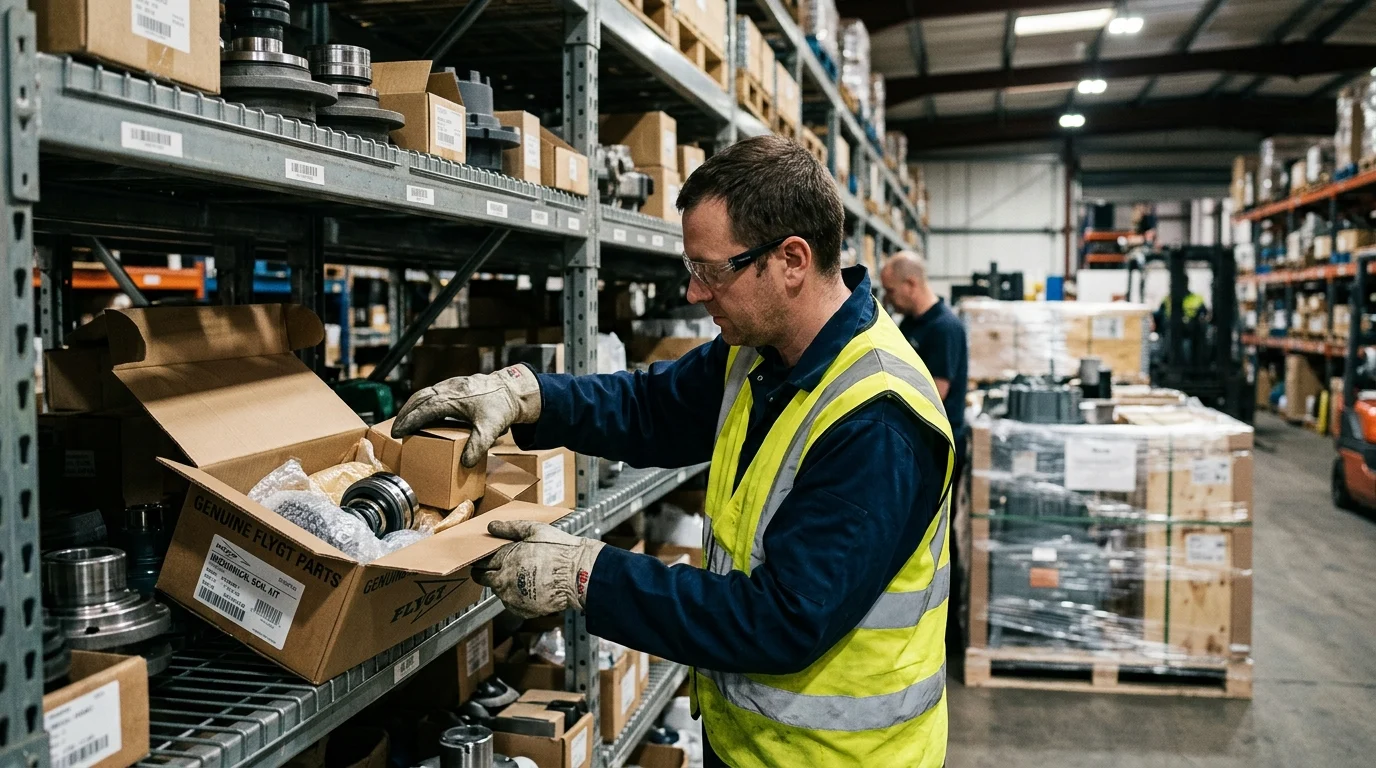
Securing the optimal Flygt pump mechanical seal involves synthesizing operational data, historical failure analysis, and rigorous mechanical compatibility checks. A structured selection process minimizes guesswork and ensures that the chosen seal will achieve its projected lifespan under demanding field conditions.
Common Failure Modes and Root Causes
Recognizing common failure modes is essential for correcting underlying system issues before specifying a replacement. Dry running is a frequent cause of catastrophic failure; without fluid lubrication, friction can cause seal face temperatures to spike above 200°C (392°F) in a matter of seconds. This rapid, uncontrolled heating leads to heat checking—microscopic radial cracks on the seal face—and severe blistering of the adjacent elastomers.
Excessive shaft deflection and vibration, often caused by worn bearings or severe pump cavitation, can also exceed the mechanical seal's spring compensation limits. When shaft runout exceeds 0.10mm, the seal faces can separate momentarily, allowing particulate matter to penetrate the fluid film and destroy the precisely lapped surfaces. Analyzing these damaged components provides critical forensic data for upgrading material specifications and correcting hydraulic anomalies.
Step-by-Step Seal Selection Process
A methodical selection process ensures long-term reliability.
Key Takeaways
- The most important conclusions and rationale for Flygt Pump Mechanical Seal
- Specs, compliance, and risk checks worth validating before you commit
- Practical next steps and caveats readers can apply immediately
Frequently Asked Questions
It prevents fluid ingress into the motor, reduces unplanned downtime, and extends pump MTBF in wastewater and drainage service.
Use SiC for fine abrasives and higher heat; choose TC for heavier solids and better impact resistance in tough drainage duty.
Choose FKM when fluid temperature exceeds about 90°C or the media contains aggressive hydrocarbons or chemicals that can swell NBR.
Yes. If operating pressure exceeds roughly 15 bar, a balanced seal helps maintain the fluid film and reduces heat and premature wear.
Yes. GW Seal provides direct-replacement and custom mechanical seals with OEM flexibility, strong inventory, and technical support for industrial buyers.
