


Introduction
Pump leakage is rarely just a maintenance nuisance; it affects product loss, worker safety, environmental compliance, and overall equipment uptime. Choosing the right seal for a pump’s fluid, pressure, temperature, shaft speed, and operating cycle can sharply reduce leakage by matching sealing performance to real process conditions instead of relying on a generic replacement. This article explains how better seal selection improves reliability, lowers failure rates, and limits hidden operating costs. It also sets out the key factors that determine whether a seal will perform consistently in service, giving readers a practical basis for evaluating options and understanding why the right choice matters long after installation.
How Better Seal Selection Reduces Pump Leakage
Industrial fluid handling systems rely heavily on centrifugal and positive displacement pumps operating under demanding, continuous conditions. A fundamental challenge in managing these systems is preventing process fluid from escaping along the rotating shaft. Effective seal selection is not merely a routine maintenance preference; it is a critical engineering decision that dictates the operational efficiency, safety, and profitability of an entire facility.
Why leakage drives cost, safety, and reliability risks
Pump leakage extends far beyond the visible loss of fluid. Financially, fugitive emissions and spilled product directly erode profit margins through wasted material and increased cleanup labor. Safety and environmental risks also escalate rapidly when handling toxic, flammable, or corrosive media. Under stringent environmental regulations, uncontained fugitive emissions can result in severe regulatory fines, sometimes exceeding $25,000 per day per violation. Mechanical seal failures are the leading cause of pump downtime, accounting for up to 69% of all pump failures in process industries. By addressing the root cause through optimized seal selection, facilities can drastically mitigate these cascading financial and operational risks.
How seal selection affects uptime and product loss
The direct correlation between the chosen sealing mechanism and overall equipment effectiveness cannot be overstated. A precisely specified mechanical seal can extend the Mean Time Between Failures (MTBF) from a baseline of 12 months to over 36 months in harsh chemical applications. This extended lifecycle directly translates to increased production uptime and a substantial reduction in expensive product loss. Organizations committed to maximizing operational reliability often partner with specialized manufacturers to analyze their specific fluid dynamics. More information on corporate technical capabilities and engineering heritage can be found by exploring who we are in the context of advanced sealing technology.
Key Variables in Seal Selection

Specifying the correct mechanical seal requires a rigorous analysis of the operating environment. A one-size-fits-all approach inevitably leads to premature failure, as the microscopic fluid film between seal faces is highly sensitive to external variables and process fluctuations.
Fluid properties, pressure, temperature, and shaft speed
The foundational step in seal selection is mapping the core operational parameters: fluid properties, stuffing box pressure, process temperature, and shaft speed. Fluids with high viscosity or suspended abrasive solids require robust face materials that resist grooving and wear. Operating pressures exceeding 400 PSI or temperatures climbing above 400°F (204°C) typically mandate balanced seal designs and advanced external cooling systems. Additionally, high shaft speeds—often reaching 3,600 RPM in standard motor-driven process pumps—generate significant frictional heat at the seal faces, necessitating careful thermal management to prevent the fluid film from vaporizing.
Seal types, face materials, and elastomers
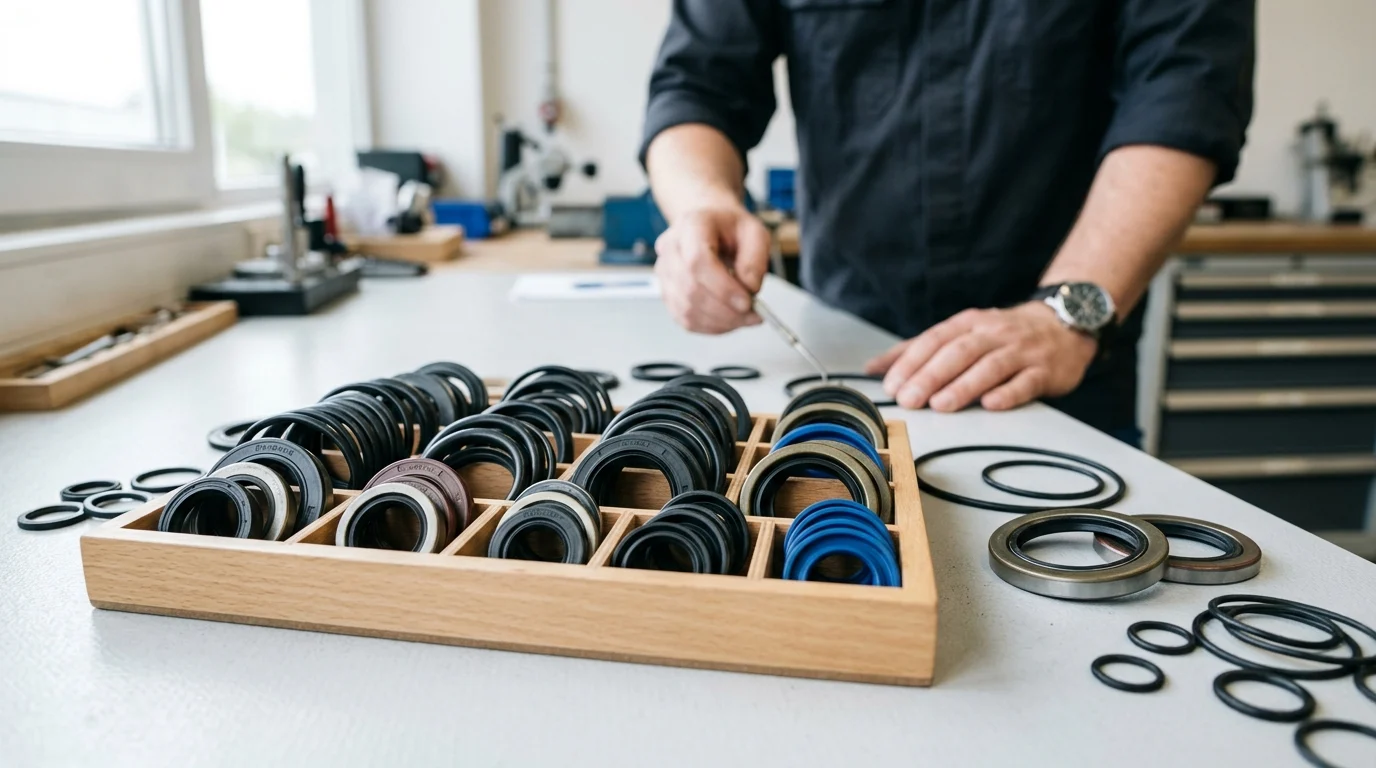
Mechanical seals rely on a combination of primary face materials and secondary sealing elastomers. Common face pairings include Carbon versus Silicon Carbide for general applications, while Tungsten Carbide is strongly preferred for highly abrasive slurries due to its exceptional hardness. Secondary elastomers, such as O-rings, must be chemically compatible with the pumped media and capable of withstanding the operating temperature. For instance, standard EPDM elastomers are generally limited to 300°F (149°C) and are incompatible with petroleum-based oils, whereas perfluoroelastomers (FFKM) can endure continuous temperatures up to 600°F (315°C) and resist a broad spectrum of harsh solvents.
Specification basics for choosing the right seal
Mastering specification basics involves meticulously matching these material properties to the specific process profile. Engineers must cross-reference chemical compatibility charts, thermal limits, and pressure-velocity (PV) values before finalizing a seal design. For a deeper look into available material configurations and custom-engineered solutions, maintenance teams and engineers often review detailed product specifications that outline specific operational tolerances.
| Elastomer Type | Max Temperature | Chemical Resistance Profile | Cost Relative to Standard |
|---|---|---|---|
| Nitrile (Buna-N) | 212°F (100°C) | Good for water, oils; poor for solvents | Baseline (1x) |
| EPDM | 300°F (149°C) | Excellent for water, steam; poor for oils | Low (1.2x) |
| FKM (Viton™) | 400°F (204°C) | Broad chemical resistance; poor for steam | Moderate (3x) |
| FFKM (Kalrez™) | 600°F (315°C) | Near-universal chemical resistance | High (20x+) |
Comparing Seal Options for Different Applications
Once the operating variables are clearly defined, engineers must evaluate the structural configuration of the sealing mechanism. The choice between traditional packing and various mechanical seal arrangements dramatically impacts long-term maintenance requirements, energy consumption, and leakage rates.
Packing vs. single and double mechanical seals
Compression packing is the oldest method of shaft sealing. By design, packing must leak to remain lubricated and cool; a standard packing gland is properly adjusted when it leaks between 10 and 60 drops per minute. In stark contrast, a single mechanical seal provides virtually zero visible leakage, utilizing a microscopic fluid film between two highly polished faces to contain the process fluid. For hazardous, toxic, or highly volatile fluids, double mechanical seals are utilized. These complex assemblies feature two independent sets of seal faces and a pressurized barrier fluid system that entirely isolates the pumped product from the surrounding atmosphere.
Trade-offs in leakage control, reliability, and cost
Every sealing method presents specific trade-offs that must be weighed against facility goals. Packing is inexpensive upfront and easy to install, but the constant intentional leakage results in ongoing product loss, high housekeeping costs, and eventual shaft sleeve wear. Single mechanical seals eliminate visible leakage and reduce shaft wear, but they require more precise installation and carry a higher initial capital cost. Double mechanical seals offer the highest level of environmental protection and reliability, yet they demand complex support systems and represent the highest initial investment.
| Sealing Technology | Initial Cost | Expected Leakage Rate | Typical MTBF | Best Application |
|---|---|---|---|---|
| Compression Packing | Low | 10–60 drops/min | 3–6 months | Non-hazardous water, slurries |
| Single Mechanical Seal | Moderate | < 5 ppm (vapors) | 12–24 months | Standard chemicals, oils, water |
| Double Mechanical Seal | High | Zero emissions | 24–48+ months | Toxic, lethal, or volatile fluids |
How operating conditions change the best choice
The optimal choice shifts dynamically based on operating conditions and process variations. A benign water pump might operate highly economically on a single mechanical seal, but if that same water contains 20% abrasive silica, a double seal with a clean external barrier fluid becomes necessary to prevent rapid face degradation. When utilizing a double seal configuration, industry standards dictate that the barrier fluid pressure must be maintained at 15 to 30 PSI above the pump's stuffing box pressure. This pressure differential ensures that any potential inner seal leakage flows safely into the pump casing, rather than allowing hazardous process fluid to contaminate the external barrier system.
Applying Seal Selection in Practice
Selecting the correct seal on paper is only the first phase of the engineering challenge. The practical application—encompassing precision installation, environmental controls, and strict regulatory adherence—ultimately determines whether the seal will perform as engineered in the field.
A step-by-step process for matching seals to pumps
A systematic approach prevents costly oversights during the critical transition from design to operation. The step-by-step process begins with validating the dimensional tolerances of the pump housing and the shaft. Next, engineers must select the appropriate API 682 piping plan to manage the specific environment surrounding the seal. Finally, the selection must be rigorously reviewed against dynamic operating scenarios, including startup transients, potential cavitation, and system flushing cycles, to ensure the seal will not be subjected to destructive dry-running conditions.
Installation, flush plans, alignment, and commissioning
Even the most advanced mechanical seal will fail prematurely if installed on a misaligned or unbalanced pump. Precision installation requires strict adherence to mechanical tolerances; for example, radial shaft runout should not exceed 0.001 to 0.002 inches, and shaft endplay should be strictly limited. Furthermore, the implementation of seal flush plans—such as API Plan 11 for process cooling or Plan 53A for maintaining a pressurized barrier fluid—is critical. These auxiliary systems regulate the temperature and pressure around the delicate seal faces, preventing fluid vaporization and ensuring continuous, clean lubrication during all phases of operation.
Compliance, safety, and emissions requirements
Environmental compliance heavily dictates modern seal selection and installation practices. Facilities processing volatile organic compounds (VOCs) are subject to stringent emissions monitoring and reporting. Under federal regulations such as EPA Method 21, equipment leaks must often be kept strictly under a threshold of 500 parts per million (ppm) of VOCs. Double mechanical seals equipped with gas-purged barrier systems or specialized containment seals are frequently the only viable solutions to guarantee compliance with these strict environmental and safety mandates, preventing both hazardous atmospheric releases and the associated legal penalties.
A Decision Framework for Long-Term Seal Performance
Achieving long-term seal reliability requires viewing the sealing system not as a consumable commodity, but as a critical lifecycle asset. Establishing a robust decision framework ensures that improvements in seal selection yield compounding operational benefits over time.
Warning signs the current seal approach is failing
Facilities must be proactive in recognizing when their current sealing strategies are inadequate. Warning signs include a high frequency of seal replacements—specifically, if the Mean Time Between Failures (MTBF) consistently drops below 12 months for standard applications. Other critical indicators include persistent housekeeping issues around the pump base, excessive barrier fluid consumption, or vibration levels exceeding 0.1 in/sec RMS. Elevated vibration often points to underlying mechanical issues, such as bearing wear or misalignment, which will inevitably destroy even the most perfectly selected seal faces.
How engineering, maintenance, and procurement should align
Long-term success relies heavily on dismantling communication silos between facility departments. Engineering must define the technical specifications based on process realities, while maintenance ensures practical installability and serviceability. Crucially, procurement must align with the total cost of ownership rather than focusing solely on the lowest initial purchase price. Saving $200 on a substandard seal can easily result in $5,000 of unplanned downtime, lost production, and maintenance labor. Organizations looking to harmonize these departmental goals and optimize their purchasing strategies often seek external expertise; teams can contact us to develop comprehensive, facility-wide sealing and reliability strategies.
How monitoring and support improve long-term results
The final pillar of a reliable decision framework is continuous monitoring and dedicated technical support. Integrating IoT-enabled condition monitoring can track barrier fluid pressure, face temperature, and housing vibration in real-time. This predictive maintenance approach allows operators to detect microscopic changes in seal performance before a catastrophic blowout occurs. By combining rigorous initial selection, proper mechanical installation, and continuous data-driven monitoring, industrial facilities can definitively reduce pump leakage, enhance workplace safety, and maximize the lifecycle value of their rotating equipment.
Further reading:
Key Takeaways
- The most important conclusions and rationale for Better Seal Selection
- Specs, compliance, and risk checks worth validating before you commit
- Practical next steps and caveats readers can apply immediately
Frequently Asked Questions
How does better seal selection reduce pump leakage?
It matches seal design and materials to fluid, pressure, temperature, and speed, reducing face wear, overheating, and chemical attack that cause leakage.
Which seal face materials work best for abrasive pump applications?
Tungsten carbide is often preferred for abrasive slurries because it resists grooving and wear better than standard face combinations.
When should a balanced mechanical seal be considered?
Use a balanced seal for higher-pressure or higher-temperature service, especially around 400 PSI or 400°F and above, to improve stability and seal life.
How do elastomers affect leakage performance?
Incorrect elastomers can swell, harden, or crack. Choose compounds based on chemical compatibility and temperature limits, such as EPDM for water or FFKM for harsh solvents.
Where can engineers review pump seal options from GW Seal?
Engineers can review GW Seal product specifications and custom-engineered sealing solutions at gwseal.com/product/ for application-specific selection support.
