


Introduction
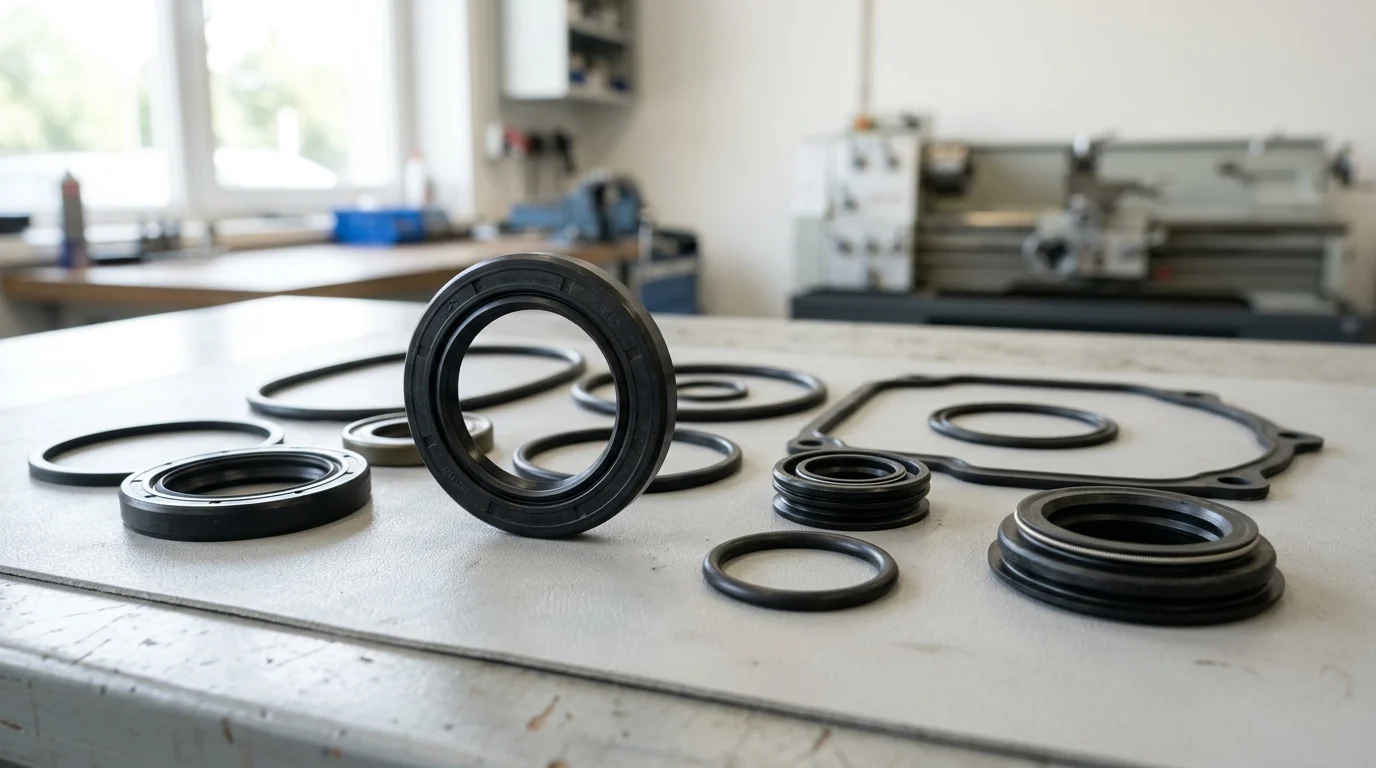
Maintenance costs often rise for reasons that have little to do with major equipment and a lot to do with small, frequently replaced components. Seals are a clear example: when they fail early or carry unnecessary brand premiums, they increase both parts spending and downtime risk. This article explains how OEM-quality aftermarket seals can lower total maintenance costs by matching required performance while improving purchasing flexibility and reducing replacement expenses. It also outlines what to evaluate in materials, fit, and supplier quality so cost savings do not come at the expense of reliability.
Why OEM-Quality Aftermarket Seals Matter
In modern industrial operations, optimizing maintenance operating expenses (OPEX) is a constant priority. Although sealing components represent a small fraction of a machine's total capital cost, they play a disproportionately large role in equipment reliability and maintenance budgets. Relying exclusively on original equipment manufacturer (OEM) parts can unnecessarily drive up routine maintenance costs, prompting facility managers to seek viable alternatives.
The transition to OEM Quality Aftermarket Seals provides a strategic pathway to reduce overhead without compromising system integrity. By understanding the functional parity between top-tier aftermarket options and branded originals, organizations can restructure their procurement strategies to prioritize engineering specifications over brand labels.
Key benefits for maintenance cost reduction
The primary driver for adopting aftermarket sealing solutions is the substantial reduction in direct procurement costs. Branded OEM seals often carry a premium markup, sometimes costing 30% to 50% more than their functionally identical aftermarket counterparts. This markup typically subsidizes the OEM's broader engineering, marketing, and distribution networks rather than reflecting superior material quality.
By shifting to high-tier aftermarket seals, maintenance departments can immediately lower the unit cost of consumables. When multiplied across annual maintenance cycles—especially in facilities managing hundreds of pumps, cylinders, or gearboxes—these savings accumulate into significant OPEX reductions, freeing up capital for proactive equipment upgrades or facility expansions.
How reliability and fit affect equipment uptime
Cost savings are quickly negated if a replacement seal fails prematurely, making reliability non-negotiable. OEM-quality aftermarket seals are reverse-engineered and manufactured to match exact original specifications, ensuring a flawless fit within the hardware housing. Dimensional tolerances are strictly maintained, frequently adhering to stringent variances of +/- 0.05 mm to prevent extrusion or dynamic leakage.
When a seal fits perfectly and utilizes the correct elastomeric compound, it maintains the intended mean time between failures (MTBF). Preserving MTBF is critical for maximizing equipment uptime, as consistent performance prevents the cascading mechanical damage and production halts associated with sudden seal blowouts or gradual fluid loss.
What Defines OEM-Quality Aftermarket Seals
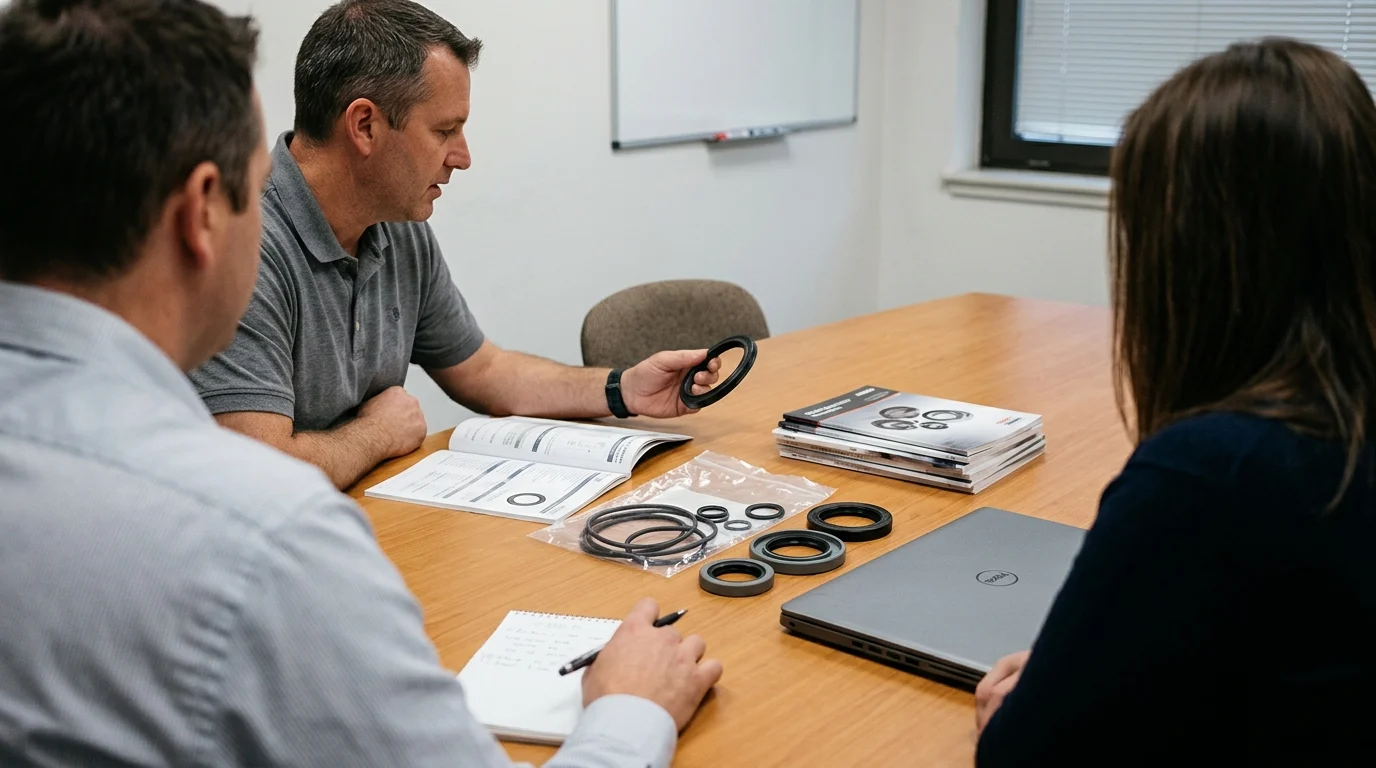
The term 'aftermarket' encompasses a broad spectrum of products, ranging from subpar knockoffs to components that rival or exceed original specifications. Distinguishing an OEM-quality seal from a standard replacement part requires a strict evaluation of engineering and manufacturing benchmarks.
Materials, tolerances, and performance standards
True OEM-quality aftermarket seals are defined by their adherence to rigorous material and performance standards. Manufacturers utilize premium elastomers such as FKM (Fluoroelastomer), NBR (Nitrile), and PTFE (Polytetrafluoroethylene), matching the exact durometer and chemical resistance of the original part. These materials are compounded to withstand extreme operational parameters, including temperature fluctuations ranging from -40°C up to 250°C, and dynamic pressure ratings that can exceed 400 bar in hydraulic applications.
Furthermore, tolerances are machined or molded to global industry standards (such as ISO or DIN). This ensures that the cross-section, inner diameter, and outer diameter provide the exact radial load necessary for optimal fluid retention and exclusion of environmental contaminants.
Aftermarket vs OEM vs low-grade alternatives
Understanding the market tiers is essential for procurement teams aiming to balance budgets with reliability. The following table illustrates the comparative differences between the three primary categories of sealing components.
| Feature | OEM Branded Seals | OEM-Quality Aftermarket | Low-Grade Alternatives |
|---|---|---|---|
| Cost Baseline | 100% (Baseline Premium) | 50% - 70% of OEM cost | 10% - 30% of OEM cost |
| Material Traceability | Full | Full | Minimal to None |
| Dimensional Tolerance | Strict (+/- 0.05 mm) | Strict (+/- 0.05 mm) | Variable (+/- 0.20 mm or worse) |
| Performance Risk | Low | Low | High (Prone to premature failure) |
While low-grade alternatives offer the deepest initial discounts, their variable tolerances and inferior compounds inevitably lead to higher lifecycle costs through frequent replacements and secondary equipment damage.
How to verify product quality
Verifying the quality of an aftermarket seal involves demanding transparency from the manufacturer. Procurement engineers should request Material Test Reports (MTRs) to confirm chemical composition and batch traceability. Additionally, reputable suppliers operate under ISO 9001 quality management systems, ensuring consistent manufacturing processes.
Another critical metric is the manufacturer's defect rate. Top-tier aftermarket producers maintain defect rates below 50 PPM (parts per million), mirroring the quality assurance levels expected from primary aerospace or automotive OEMs. Requesting sample parts for dimensional inspection using optical comparators or coordinate measuring machines (CMM) before committing to a bulk purchase is a standard best practice.
Where Cost Savings Appear Most
The financial impact of integrating high-quality aftermarket seals is realized across multiple operational phases. While the initial purchase price is the most visible metric, the broader economic benefits manifest in labor efficiency, inventory management, and risk mitigation.
Direct maintenance and replacement cost savings
Direct cost savings are the immediate result of unit price differentials. For example, if a specialized OEM mechanical seal for a centrifugal pump costs $1,200, an equivalent OEM Quality Aftermarket Seal engineered to the same specifications might be procured for $650 to $750. Over an annual maintenance schedule requiring 20 such replacements, a facility saves upwards of $10,000 on a single equipment class.
These direct savings also extend to routine overhaul kits. By sourcing aftermarket O-rings, gaskets, and lip seals for scheduled upkeep, maintenance, repair, and overhaul (MRO) budgets can be stretched further, allowing organizations to maintain optimal inventory levels without tying up excessive capital.
Indirect savings from reduced downtime and failures
The most substantial financial benefits often stem from indirect savings. In heavy manufacturing or petrochemical processing, unplanned downtime can cost an average of $10,000 to $50,000 per hour in lost production. A low-grade seal that fails prematurely triggers these catastrophic costs, making reliability paramount.
By utilizing OEM-quality aftermarket seals, facilities maintain their scheduled maintenance intervals, avoiding the exorbitant costs of emergency shutdowns, expedited shipping for replacement parts, and overtime labor rates for repair crews. Consistent seal performance also protects expensive adjacent components, such as pump shafts and bearings, from scoring or corrosive fluid damage.
Best-fit applications across industrial equipment
Certain industrial applications offer higher yields for aftermarket seal substitution. High-wear systems that require frequent routine maintenance are prime candidates. For instance, hydraulic cylinders in earthmoving equipment or stamping presses consume seals at a high rate due to abrasive operating environments.
Similarly, standard centrifugal pumps and industrial gearboxes utilize universally standardized seal profiles. Because the engineering geometries for these applications are well-established, premium aftermarket manufacturers can produce highly reliable replacements at scale, offering maximum cost reduction with minimal integration risk.
How to Evaluate and Source the Right Seals
Sourcing the right aftermarket seal requires a systematic approach to vendor qualification and technical validation. Organizations must move beyond simple part-number cross-referencing to ensure that the physical and chemical properties of the replacement component match the operational demands.
Specification checks before purchase
Before initiating a purchase, maintenance engineers must define the specific operational parameters the seal will endure. Relying solely on the OEM part number can be risky if the original seal was not properly specified for the actual working conditions. Key specifications include shaft speed (measured in meters per second), system pressure, temperature extremes, and the chemical composition of the fluid being sealed.
Upgrading the seal material during the specification check is often a cost-effective strategy. If an OEM specified a standard NBR seal that consistently degrades at 110°C, specifying an aftermarket FKM seal for the replacement can extend the operational lifecycle significantly, turning a routine replacement into an equipment upgrade.
Supplier, inventory, and lead-time considerations
Vendor evaluation extends beyond product quality to encompass supply chain reliability. A critical advantage of aftermarket suppliers is often their agility. While OEM lead times for specialized seals can stretch from 8 to 12 weeks, dedicated aftermarket manufacturers frequently maintain localized inventories or possess the rapid prototyping capabilities to deliver within 2 to 3 weeks.
| Sourcing Metric | Traditional OEM Supplier | Premium Aftermarket Supplier |
|---|---|---|
| Average Lead Time | 8 - 12 Weeks | 2 - 4 Weeks |
| Minimum Order Quantity (MOQ) | High (e.g., 500+ units) | Flexible (e.g., 50 - 100 units) |
| Customization Capability | Rigid / Slow | Highly Agile |
| Technical Support | Generalized | Specialized Sealing Expertise |
Lower Minimum Order Quantities (MOQs) also allow facilities to implement just-in-time (JIT) inventory strategies, reducing warehousing costs and minimizing the risk of elastomer degradation during long-term storage.
Balancing price, performance, and risk
Successful procurement balances the triad of price, performance, and risk. To mitigate risk when transitioning to a new aftermarket supplier, organizations should implement a phased adoption strategy. This involves starting with non-critical or redundant systems, such as secondary cooling water pumps, before installing aftermarket seals in mission-critical applications like main boiler feed pumps.
Procurement teams should also establish clear service level agreements (SLAs) with suppliers, detailing warranty terms, acceptable defect rates, and technical support availability. This structured approach ensures that the financial benefits of lower prices are not offset by hidden operational risks.
How to Build a Smarter Replacement Strategy
Transitioning to aftermarket seals should not be an ad-hoc purchasing decision, but rather a core component of a broader, data-driven maintenance strategy. By leveraging operational data, facilities can continuously optimize their sealing solutions.
Using failure history to guide seal selection
Historical failure data is the most valuable tool for refining seal selection. Maintenance teams should conduct root cause analyses on all premature seal failures to determine if the issue was due to chemical attack, thermal degradation, or abrasive wear. For example, if maintenance logs indicate that a specific hydraulic seal fails consistently at 120°C due to hardening, the replacement strategy should mandate an upgrade to a higher-temperature elastomer.
By analyzing computerized maintenance management system (CMMS) data, reliability engineers can identify bad actors—equipment that consumes a disproportionate amount of sealing components. Targeting these machines with upgraded OEM-quality aftermarket seals can drastically reduce localized maintenance expenditures.
When aftermarket seals are the right choice
While OEM seals are often mandated during a machine's initial warranty period to maintain coverage, aftermarket seals become the optimal choice once that warranty expires. Post-warranty equipment benefits immensely from the cost flexibility and customization options provided by specialized seal manufacturers.
Furthermore, high-volume consumable applications are ideal for aftermarket integration. For guidance on matching specific equipment profiles with the appropriate aftermarket solutions, facility managers can consult specialists regarding OEM Quality Aftermarket Seals to ensure engineering parity and compliance with industry standards.
Implementation steps for long-term savings
Implementing a smarter replacement strategy requires distinct execution steps. First, standardize the facility's bill of materials (BOM), cross-referencing all OEM part numbers with their exact aftermarket engineering equivalents. Second, conduct a controlled 90-day pilot test on select machinery, closely monitoring vibration, temperature, and leakage rates to validate performance.
Finally, execute a facility-wide rollout, training maintenance personnel on the new installation protocols and inventory systems. By committing to this systematic approach, industrial facilities can realistically target a 15% to 20% annual reduction in seal-related maintenance OPEX, securing long-term profitability and operational resilience.
Further reading:
Key Takeaways
- The most important conclusions and rationale for OEM Quality Aftermarket Seals
- Specs, compliance, and risk checks worth validating before you commit
- Practical next steps and caveats readers can apply immediately
Frequently Asked Questions
How do OEM-quality aftermarket seals reduce maintenance costs?
They usually cost 30%–50% less than branded OEM parts while maintaining similar fit, material performance, and service life, lowering both purchase and replacement costs.
What makes an aftermarket seal truly OEM-quality?
It should match original dimensions, tolerance, and material specs, such as NBR, FKM, or PTFE, with documented traceability and consistent manufacturing quality.
How can I verify seal quality before buying from a supplier like GW Seal?
Ask for material test reports, ISO 9001 certification, batch traceability, and tolerance data to confirm the seal meets your equipment’s original requirements.
Are low-cost generic seals worth the savings?
Usually not. Poor tolerances and weaker compounds can cause leakage, early failure, and unplanned downtime that quickly outweigh the lower upfront price.
Which applications benefit most from OEM-quality aftermarket seals?
High-cycle pumps, hydraulic cylinders, gearboxes, and other equipment with frequent seal replacements benefit most because small unit savings add up across maintenance intervals.
