


Introduction
Mechanical seals in Flygt pumps are not interchangeable components; their design must match the liquid, operating pressure, temperature, solids content, and duty cycle of the application. A seal that performs well in clean water can fail quickly in wastewater, slurry, or chemically aggressive media because face materials, elastomers, and secondary sealing arrangements respond differently to heat, abrasion, and contamination. This article explains why those differences matter, what operating conditions drive seal selection, and how application-specific choices affect reliability, leakage risk, and maintenance intervals, setting up a closer look at the factors engineers use when specifying the right seal configuration.
Why Flygt Pump Mechanical Seals Vary by Application
Submersible pumping systems operate in highly variable environments, making the mechanical seal the most critical point of failure in the entire fluid handling process. Because fluid dynamics, chemical compositions, and abrasive concentrations shift radically from one site to another, a one-size-fits-all sealing approach inevitably leads to premature equipment failure. Understanding these operational variables is the first step toward optimizing pump uptime and reducing long-term maintenance costs.
Introduction and selection criteria
The primary selection criteria for a flygt mechanical pump seal require a deep analysis of the operational envelope rather than just matching a physical dimension. Engineers must evaluate systemic parameters such as maximum operating pressure, which frequently reaches up to 1.2 MPa in deep submersible applications, and continuous temperature thresholds that can easily exceed 90°C in industrial runoff. Furthermore, fluid viscosity dictates the thickness of the hydrodynamic fluid film—often measuring less than 0.5 microns—that lubricates the seal faces. Relying on a standard factory seal without verifying these operational thresholds often results in compromised elastomer integrity, vapor flashing at the seal faces, and rapid mechanical degradation.
Seal basics and common failure modes
At their core, these mechanical seals rely on a rotating face pressed against a stationary face, separated only by that microscopic fluid film. Common failure modes include dry running, which spikes interfacial temperatures and causes thermal shock to brittle faces, and abrasive grooving, where suspended particles infiltrate the seal gap and carve destructive paths. When standard original equipment manufacturer (OEM) seals fail under these conditions, it serves as a diagnostic indicator that the baseline materials—often basic carbon or lower-grade ceramics—are fundamentally insufficient for the actual operational stresses encountered in the field.
How Flygt Pump Mechanical Seals Differ Across Industries

The environmental demands placed on submersible pumping systems dictate the material composition and structural design of the mechanical seal. Different industries expose pumps to unique chemical and physical threats that require highly specialized sealing strategies to prevent catastrophic fluid ingress into the motor housing.
Wastewater and sewage requirements
In municipal wastewater and sewage treatment facilities, seals must withstand biological matter, fibrous debris, and continuously fluctuating chemical compositions. The pumped medium often contains suspended solids at concentrations up to 8% and presents varying pH levels ranging from a highly acidic 4.0 to an alkaline 10.0. To prevent fibrous buildup and chemical degradation, seals in these environments typically utilize Silicon Carbide (SiC) faces paired with resilient elastomers like FKM (Viton) or NBR. This specific material combination prevents organic material from wedging between the seal faces while simultaneously resisting chemical attacks from industrial cleaning agents and corrosive byproducts.
Mining and other harsh-duty conditions
Mining operations and heavy industrial dewatering present much harsher conditions, characterized by high-velocity abrasive slurries and severe mechanical shocks. In these extreme environments, standard materials fail rapidly due to localized erosion. As a professional application solutions provider, GW SEAL specializes in engineering robust upgrades for these harsh duties, frequently transitioning standard plastic retaining bodies to heavy-duty metal housings that resist deformation. Furthermore, replacing standard carbon faces with pure Tungsten Carbide (TC) is essential to resist the extreme scoring caused by silica and mineral ores, as TC offers superior fracture toughness compared to standard ceramics.
| Material Pairing | Typical Application | Hardness (Vickers HV) | Relative Lifespan in Slurry |
|---|---|---|---|
| Carbon / Ceramic | Light Water | 1500 (Ceramic) | Low (1-3 months) |
| SiC / SiC | Wastewater | 2500 - 2800 | Medium (6-12 months) |
| TC / TC | Mining Slurry | 1800 - 2200 (High Toughness) | High (12-24+ months) |
How Buyers and Maintenance Teams Should Choose Seals
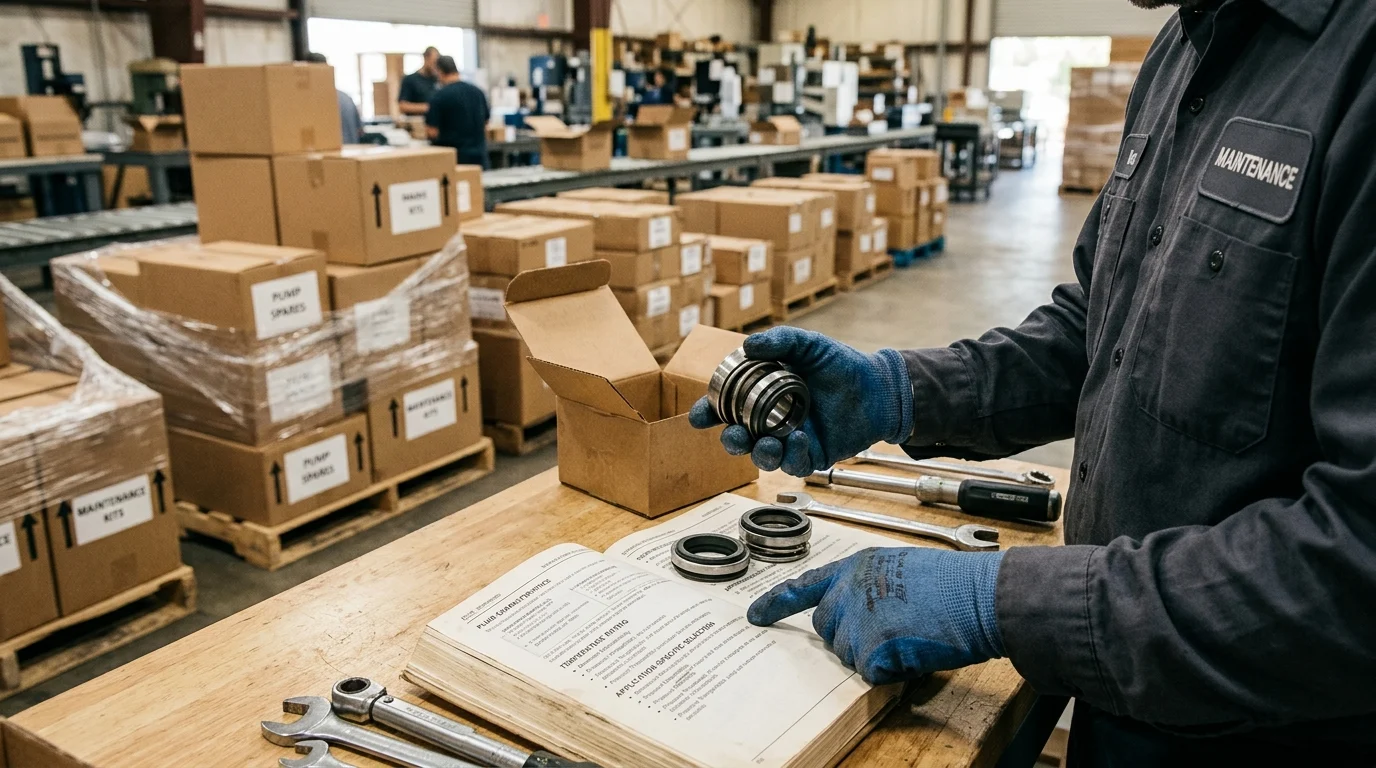
Selecting the correct mechanical seal requires a systematic, engineering-led approach that moves beyond simply cross-referencing a part number. Maintenance teams must evaluate the physical condition of the pump hardware and the specific characteristics of the pumped medium to ensure long-term reliability and minimize total cost of ownership.
Selection steps and inspection checks
The selection process begins with precise physical inspections of the pumping equipment. Technicians must accurately measure shaft dimensions, which typically range from 20mm to 90mm across standard Flygt pump ranges, and verify that dynamic shaft runout does not exceed the critical threshold of 0.05mm. Excessive vibration, bearing wear, or shaft deflection will destroy even the most robust seal materials by forcing the faces apart. Additionally, buyers must analyze the pumped fluid for specific gravity, vapor pressure, and abrasive content to determine whether standard enclosed spring mechanisms or protected, non-clogging designs are required to prevent spring binding.
Key takeaway on application fit
OEM seals are designed for a general operating envelope. We design our replacements for the specific boundaries of your application—upgrading from plastic to metal bodies, or from standard carbon to pure Tungsten Carbide.
Don't guess your application requirements. Send us your pump model and the medium you are pumping. Our engineers will provide the exact cross-reference and material upgrade recommendation within 24 hours.
Key Takeaways
- The most important conclusions and rationale for Flygt Pump Mechanical Seals
- Specs, compliance, and risk checks worth validating before you commit
- Practical next steps and caveats readers can apply immediately
Frequently Asked Questions
Why do Flygt pump mechanical seals need different designs for different applications?
Because pressure, temperature, pH, and solids content change by site. Matching seal materials and structure to the actual duty helps prevent dry running, abrasive wear, and early leakage.
Which seal face materials are best for wastewater or sewage pumps?
SiC/SiC is a common choice for wastewater because it handles suspended solids and chemical variation well. Pair it with FKM or NBR elastomers based on the fluid chemistry.
What seal setup works better in mining slurry service?
TC/TC faces and a heavy-duty metal housing usually perform better in abrasive slurry. This combination resists scoring, shock, and deformation far better than standard carbon or ceramic options.
What operating data should I check before ordering a Flygt pump mechanical seal?
Confirm pump model, shaft or seal size, pressure, temperature, fluid type, pH, and solids concentration. Also note any dry-running events or vibration, since they affect material selection.
Can GW SEAL help with upgraded replacements for harsh-duty Flygt pump applications?
Yes. GW SEAL provides application-based seal upgrades for Flygt pumps, including material changes and stronger housings for wastewater, dewatering, and mining conditions.
