


Introduction
Choosing an M7N mechanical seal for a process pump is not just a matter of matching dimensions; it requires balancing pressure, temperature, shaft speed, fluid chemistry, and material compatibility. Because this unbalanced, pusher-type seal is often used in demanding industrial service, a poor selection can shorten seal life, increase leakage risk, and disrupt pump reliability. This guide explains the key operating limits, construction features, and application factors that should shape your choice, so you can evaluate whether an M7N seal fits your pump duty and specify it with greater confidence before moving into detailed selection criteria.
Why M7N Mechanical Seal Selection Matters for Process Pumps
The M7N mechanical seal is a fundamental component for industrial process pumps, providing reliable fluid containment across diverse manufacturing environments. As an unbalanced, pusher-type seal featuring a sinusoidal wave spring, its selection directly impacts pump efficiency, maintenance intervals, and environmental safety. Proper specification ensures that the seal can handle the dynamic forces within the pump casing while maintaining a consistent fluid film between the seal faces. The operational lifecycle of process pumps depends heavily on the mechanical seal's durability, making the initial selection phase a critical engineering task.
Operating Risks
Specifying an incorrect mechanical seal introduces severe operational risks, ranging from minor fugitive emissions to catastrophic pump failure. If an M7N seal is deployed outside its designed pressure threshold of 2 MPa or its velocity limit of 20 m/s, the fluid film between the primary faces can vaporize, leading to dry running and immediate thermal shock. Pressure transients exceeding the 2 MPa limit can cause catastrophic face separation, allowing process fluid to flood the atmospheric side of the pump.
Furthermore, selecting inappropriate elastomer materials for the O-rings can cause chemical degradation, resulting in a loss of elasticity and subsequent leakage. In continuous process industries, a single seal failure can halt production lines, incurring downtime costs that far exceed the initial component investment. Recognizing these risks is the first step in implementing a rigorous seal selection protocol to protect high-value process equipment.
Application Context
The M7N design is highly versatile, making it suitable for a broad spectrum of industrial applications including chemical processing, pulp and paper manufacturing, shipbuilding, and wastewater management. It is specifically engineered to handle moderately corrosive media and fluids with low solids content. The bi-directional rotational capability allows it to function independently of the pump shaft's turning direction, offering operational flexibility across different pump configurations.
Additionally, the sinusoidal wave spring delivers even closing forces around the circumference of the sealing face, which prevents distortion and maintains integrity even when managing lubricating oils or municipal sewage. This uniform load distribution is particularly beneficial in applications where pressure fluctuations are common, ensuring that the seal faces remain in optimal contact regardless of minor axial shaft movement or vibration within the process context.
Technical Criteria for M7N Mechanical Seal Selection
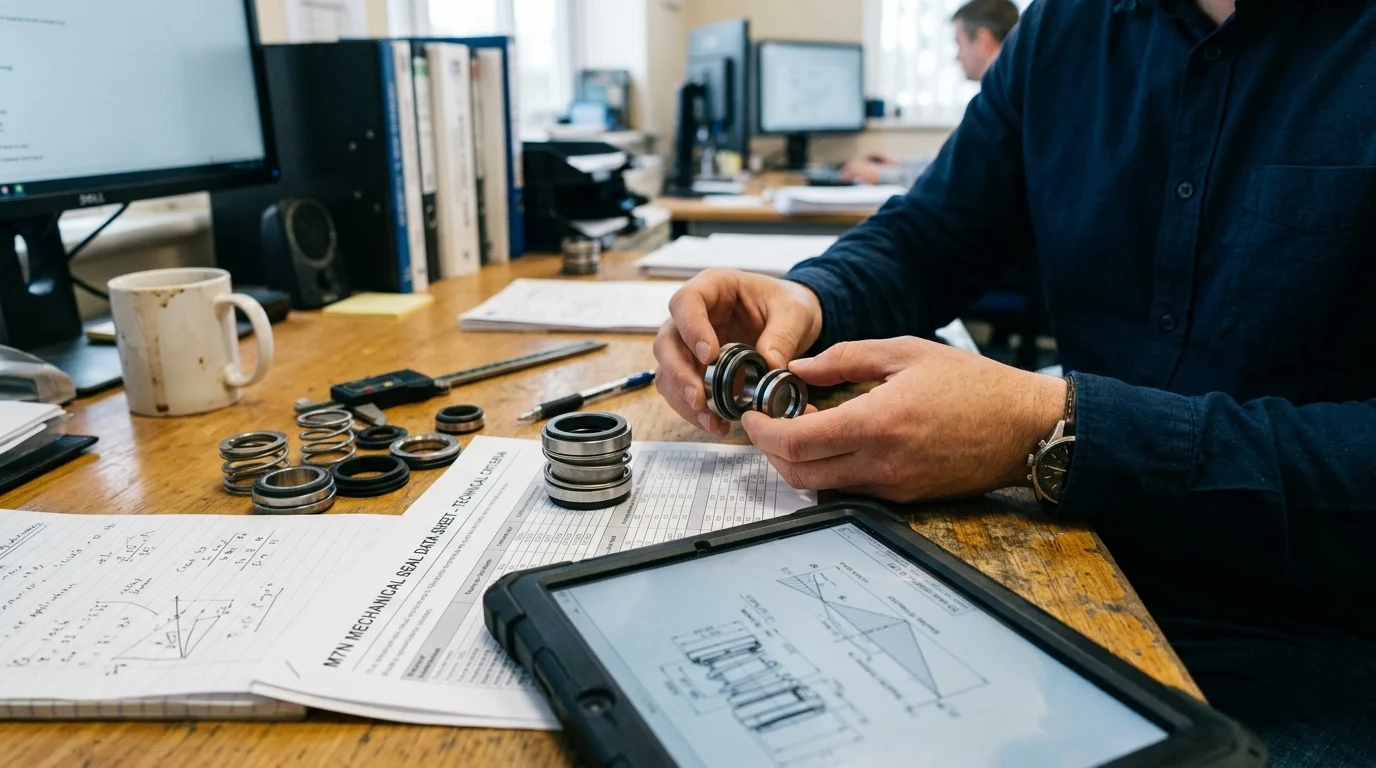
Evaluating the technical specifications of the M7N mechanical seal requires a thorough understanding of both its structural design and the metallurgical properties of its components. Engineers must align these technical criteria with the specific fluid dynamics, thermal profiles, and chemical compositions of the target pumping system.
Design Features and Operating Limits
The architecture of the M7N seal relies on an O-ring mounted, unbalanced configuration that excels in universal applications. The drive of the shaft is secured using set screws tightened with a hex key, ensuring a positive mechanical drive that prevents slippage during startup and shutdown phases. Operationally, the seal accommodates a broad temperature range from -40°C to 220°C, making it resilient against both cryogenic chilling and high-heat process fluids.
The integration of a sinusoidal wave spring significantly enhances the pressure-velocity (pV) capability compared to traditional single-coil springs. This design allows the seal to sustain continuous rotational speeds up to 20 m/s while maintaining uniform face loading. The compact axial footprint of the wave spring also makes the M7N an ideal choice for stuffing boxes with limited space, provided the operating pressure remains at or below the maximum rating of 2 MPa.
Materials and Standards
Adherence to dimensional and quality standards is critical for reliable integration, and the M7N strictly follows the EN 12756 standard. This compliance ensures seamless interchangeability across various global pump brands. Material selection dictates the seal's chemical resistance and overall wear life, requiring careful matching to the process media.
Rotary and stationary rings are typically available in Carbon, Silicon Carbide (SiC), Tungsten Carbide (TC), or 99% Ceramic. Secondary sealing elements utilize VITON, NBR, or EPDM elastomers, depending on the required thermal and chemical resistance. Metal components, including the wave spring, are manufactured from corrosion-resistant SUS304 or SUS316 stainless steel. The standard stationary seat paired with this model is the G9 configuration, though custom parameters can be engineered for specialized applications.
| Component | Material Options | Max Temp Limit | Typical Application |
|---|---|---|---|
| Primary Seal Faces | Carbon / SiC / TC | 220°C | Abrasive or low-lubricity fluids |
| Secondary O-Rings | NBR / EPDM / VITON | 120°C - 200°C | Water, oils, aggressive chemicals |
| Metal Hardware | SUS304 / SUS316 | N/A | General to moderately corrosive media |
How to Compare and Validate M7N Mechanical Seal Options
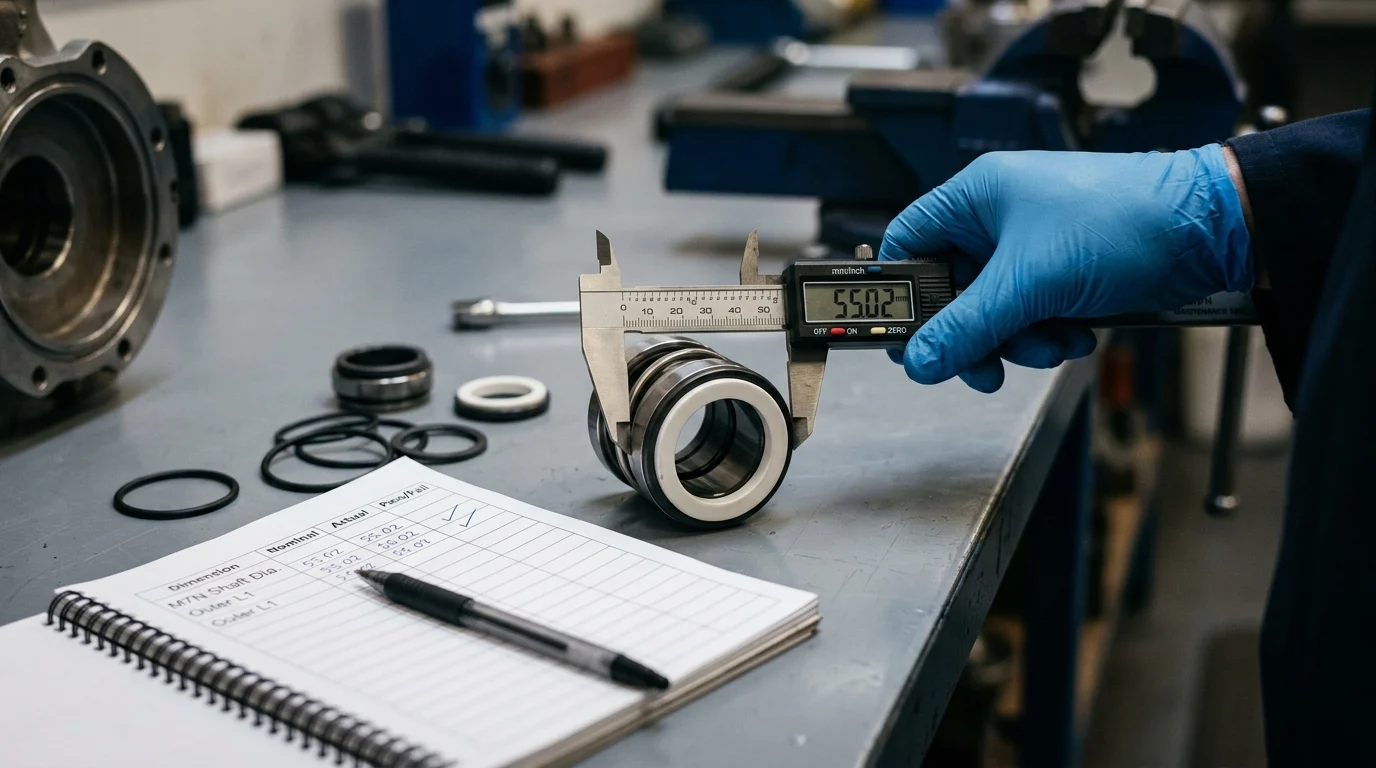
Procurement and engineering teams must implement a rigorous validation process when sourcing M7N mechanical seals. Comparing options involves looking beyond the initial purchase price to assess long-term reliability, manufacturer quality control, and exact dimensional compatibility with existing pump assets.
Evaluation Criteria
When comparing M7N variants, such as alternatives to the EagleBurgmann Type M7N or AESseal Type N-W07DMU, buyers should prioritize manufacturers utilizing ISO9001-certified facilities to guarantee consistent production tolerances. Evaluation must focus on the surface flatness of the primary seal faces, typically measured in light bands, which directly dictates the seal's ability to prevent microscopic leakage under dynamic conditions.
Additionally, engineers should analyze the precise spring tension and the durometer hardness of the elastomeric O-rings. A comprehensive cost-benefit analysis should weigh the initial procurement cost against the projected mean time between failures (MTBF). High-quality equivalent seals can offer identical performance parameters—such as the 2 MPa pressure limit and 20 m/s speed tolerance—at a more affordable price point, provided they pass stringent quality assurance testing.
Fit Verification Process
Validating the physical fit of the M7N seal requires precise micrometry and a detailed review of the pump casing dimensions.
Key Takeaways
- The most important conclusions and rationale for m7n mechanical seal
- Specs, compliance, and risk checks worth validating before you commit
- Practical next steps and caveats readers can apply immediately
Frequently Asked Questions
What is an M7N mechanical seal used for?
It is a wave-spring, unbalanced pusher seal for process pumps handling clean or low-solids fluids in chemical, wastewater, pulp, and general industrial service.
What operating limits should I check before choosing an M7N seal?
Confirm pressure up to 2 MPa, shaft speed up to 20 m/s, and temperature from -40°C to 220°C. Exceeding these limits can cause leakage or rapid face failure.
Which face and elastomer materials fit an M7N application?
Use Carbon, SiC, TC, or ceramic faces based on wear and media; choose NBR, EPDM, or Viton O-rings to match fluid chemistry and temperature.
Is the M7N seal interchangeable with standard pump designs?
Yes, M7N typically follows EN 12756 dimensions, supporting replacement across many pump brands. Always verify shaft size, seat type, and installation space before ordering.
Can GW Seal supply custom or OEM-compatible M7N mechanical seals?
Yes, GW Seal provides OEM-flexible and custom-built M7N seals with quick support, strong inventory, and ISO9001-controlled manufacturing for reliable industrial supply. 💬
