


Introduction
Methane control in pipeline systems often depends on a small but critical component: the mechanical seal around compressor shafts. When sealing performance falls short, even microscopic gaps can allow pressurized gas to escape continuously, turning routine operation into a source of fugitive emissions. This article explains how mechanical seals influence methane leakage, why conventional compressor sealing points are vulnerable, and what distinguishes designs aimed at near-zero emissions.
Why mechanical seals matter for methane emissions
The global natural gas infrastructure relies on vast pipeline networks to transport energy across continents. Keeping this gas flowing requires powerful compressors, but this process introduces significant environmental challenges. Minimizing greenhouse gas emissions is a critical priority for the energy sector. As an industry leader, GWSEAL demonstrates strong corporate social responsibility by prioritizing environmental protection through advanced sealing technologies. A high-performance mechanical seal is essential not just for operational efficiency, but for preventing potent greenhouse gases from entering the atmosphere.
How compressor shaft seals become methane leak points
Compressors use spinning shafts to drive the blade wheels that push natural gas through pipelines. The point where the rotating shaft exits the stationary compressor housing creates a natural vulnerability for gas containment. Even in highly sophisticated conventional dry gas setups, the stationary and rotating rings do not perfectly seal. A microscopic gap, often measuring just two to three thousandths of a millimeter wide, remains between the seal faces. Because pipeline gas is highly pressurized, this tiny clearance provides an escape route for methane, allowing continuous, fugitive emissions directly into the environment during normal operations.
Why zero-emission mechanical seals matter for climate goals
Methane is the primary component of natural gas and possesses a global warming potential significantly higher than carbon dioxide over a 20-year period. Capturing these fugitive emissions is vital for meeting international climate agreements. If major pipeline networks transitioned entirely to zero-emission mechanical seals, the environmental impact would be massive. Industry estimates suggest that upgrading compressor seals globally could prevent the release of methane equivalent to more than 63 million tons of carbon dioxide annually. By championing leak-free technologies, manufacturers like GWSEAL actively support global decarbonization efforts, proving that industrial progress and ecological stewardship can seamlessly coexist.
How mechanical seals control methane emissions
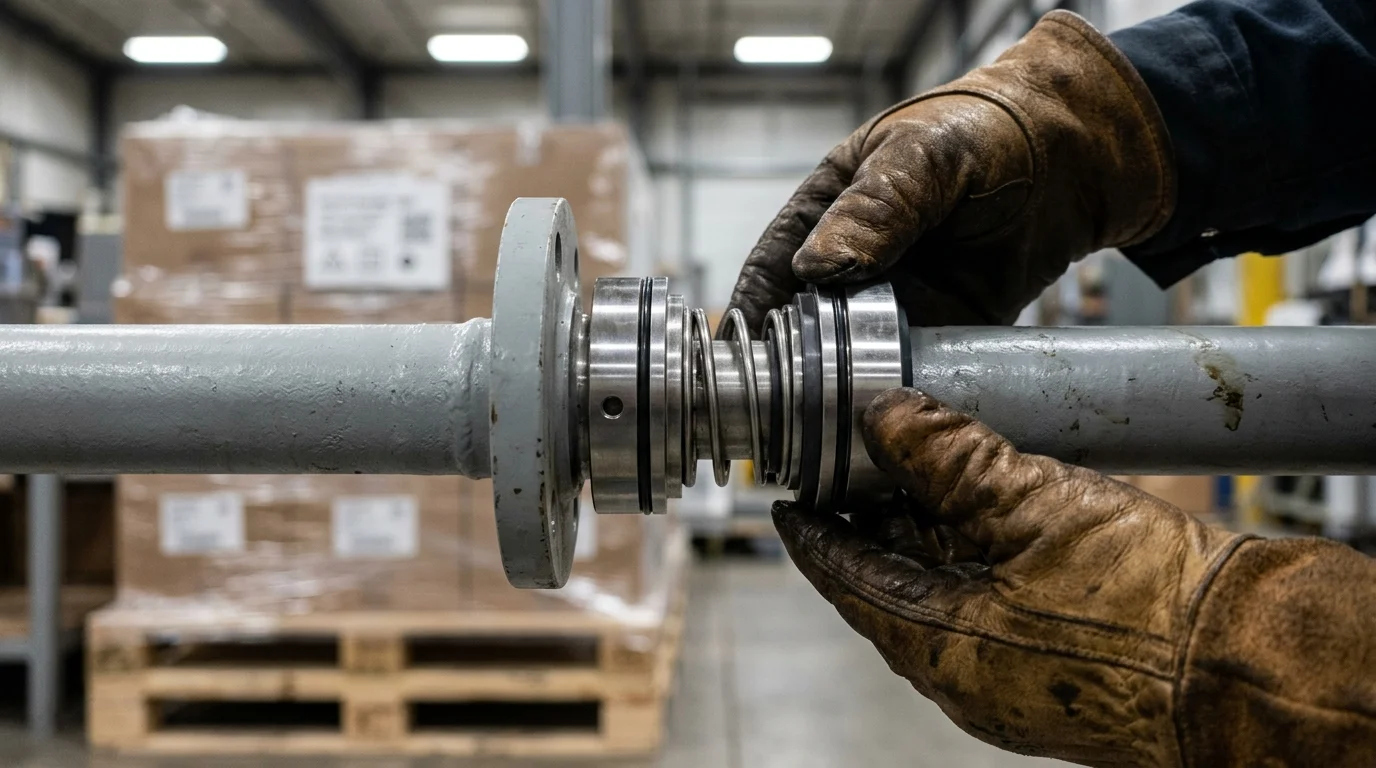
Advancements in sealing technology have transformed how pipeline operators manage fugitive emissions. Modern engineering focuses on actively blocking gas migration rather than merely minimizing the clearance between rotating components.
How nitrogen-barrier mechanical seals work
The most effective method for achieving zero methane emissions relies on a barrier fluid system. In these advanced configurations, nitrogen gas is injected between the seal faces to create an impenetrable barrier. Because the nitrogen is supplied at a pressure slightly higher than the pipeline gas—capable of handling main operating pressures up to 160 bar—the pressure differential forces the barrier gas inward. This ensures that only harmless nitrogen enters the compressor housing or escapes into the atmosphere, completely preventing the highly pressurized methane from migrating across the seal gap. The injected nitrogen also provides aerodynamic gas lubrication, which minimizes friction and heat generation.
How mechanical seals compare with conventional sealing options
| Sealing Technology | Methane Leakage Rate | Max Operating Pressure | Typical Maintenance Interval |
|---|---|---|---|
| Traditional Packing | High (Continuous) | < 50 bar | 6–12 months |
| Conventional Dry Gas | Low (Baseline loss) | Up to 120 bar | 3–5 years |
| Nitrogen-Barrier Seal | Zero (0.00%) | Up to 160 bar | 10+ years |
By implementing barrier systems, operators eliminate the environmental penalty associated with conventional baseline losses while dramatically extending the lifecycle of the compressor components.
How to evaluate and implement mechanical seals

Transitioning to zero-emission infrastructure requires careful planning and a thorough technical evaluation. Pipeline operators must align their equipment upgrades with both operational demands and overarching environmental mandates. By adopting rigorous selection and implementation protocols, companies can fulfill their corporate social responsibility targets while ensuring uninterrupted gas transport.
What criteria should guide seal selection
The selection process for a mechanical seal must account for the specific thermodynamic and mechanical conditions of the pipeline compressor. Engineers must evaluate the maximum dynamic pressure, shaft rotation speeds, and the availability of a reliable nitrogen supply for the barrier system. A primary criterion is the lifecycle cost versus environmental benefit. Decision-makers should also prioritize vendors that demonstrate a clear commitment to sustainable manufacturing and high-precision engineering, ensuring that over 95 percent of the installed components perform reliably under fluctuating pipeline loads.
What implementation steps support retrofit or new builds
Implementing these advanced seals—whether in greenfield projects or as retrofits to existing compressors—follows a structured engineering pathway. The first step involves a comprehensive site audit to confirm that the compressor housing can accommodate the new seal dimensions. Next, operators must install or upgrade the nitrogen generation and regulation skids. Finally, integrating smart condition monitoring systems is essential. These digital tools track barrier pressure, temperature, and gas flow rates in real time, instantly alerting technicians to any deviations.
Key Takeaways
- The most important conclusions and rationale for mechanical seal
- Specs, compliance, and risk checks worth validating before you commit
- Practical next steps and caveats readers can apply immediately
