


Introduction
Precision seal components depend on machining accuracy, material consistency, and tight control over every production step. When stainless steel parts are made through a vertically integrated process, manufacturers can manage the billet, machining parameters, inspection, and final assembly within one workflow, reducing variation that can affect sealing performance. This approach helps maintain critical dimensions, surface finish, and metallurgical stability in parts that must withstand pressure, friction, and corrosion. The discussion below explains why integrated production improves reliability and how it supports longer-lasting mechanical seals.
How Vertical Integration Improves Stainless Steel Machining Precision
The production of precision seal components demands rigorous metallurgical control and exact geometric fidelity. For industrial applications where fluid containment is critical, the manufacturing architecture directly dictates the final performance of the mechanical seal. Precision is paramount: dimensional accuracy ensures absolute leakage prevention, maintains hydrodynamic film stability under pressure, and maximizes the wear life of the mating rings.
Vertical integration—bringing the entire manufacturing process from raw stainless steel billet to final assembled seal under one roof—has emerged as a structural necessity for top-tier seal reliability. By eliminating fragmented supply chains, manufacturers can strictly govern the specific variables that influence stainless steel machining, resulting in superior mechanical alignment and operational longevity.
In-house machining vs external shops
Relying on fragmented supply chains often forces mechanical seal manufacturers to source metal components from generalized third-party machine shops. These external facilities typically juggle diverse industrial portfolios, meaning their tooling setups and coolant strategies are rarely optimized exclusively for the work-hardening characteristics of austenitic or martensitic stainless steels. In contrast, utilizing in-house CNC machining allows a manufacturer to dedicate equipment entirely to fluid control components.
When production remains internal, engineers can tailor cutting speeds, feed rates, and tool geometries specifically for seal ring housings and glands. This specialization minimizes tool deflection and thermal distortion during the machining of tough alloys, ensuring that the foundational geometry of the seal component is flawless before it ever reaches the lapping or assembly phases.
Effects on tolerance control and delivery reliability
The most significant advantage of an integrated manufacturing model is absolute control over dimensional tolerances. In critical fluid applications, the acceptable margin for error is virtually nonexistent. Vertically integrated facilities routinely achieve tolerances of ±0.002mm (±2µm) on critical seal face mating surfaces, a specification that external shops often struggle to maintain consistently across high-volume production runs.
This rigorous tolerance control directly improves delivery reliability. When a third-party supplier fails to meet the ±2µm threshold, the resulting rejection and rework cycle can delay seal assembly by weeks. Internalizing the machining process drops component defect rates—often from an industry average of 3.5% down to sub-0.5% levels—ensuring that assembly lines are continuously fed with compliant parts and OEM delivery schedules remain fully insulated from external vendor delays.
Quality, Cost, and Lead-Time Benefits
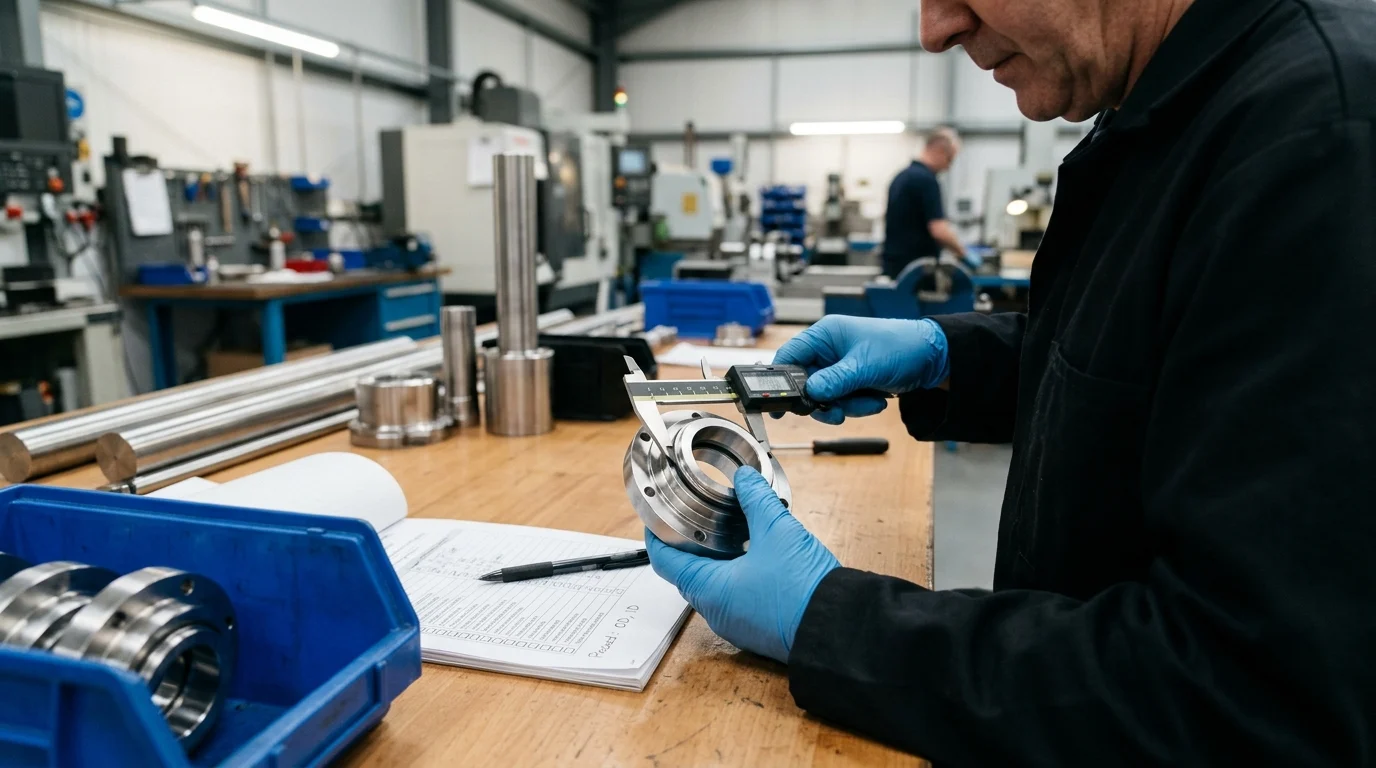
When a single facility manages the lifecycle of a SS316 mechanical seal from raw alloy cutting to final hydrostatic testing, the compounding benefits heavily favor the original equipment manufacturer (OEM). The direct correlation is undeniable: tighter machining control equals more reliable seal function in the field.
Process control, surface finish, and consistency
Maintaining a stable fluid film between seal faces requires exceptional surface finishes. Through integrated precision grinding and lapping stations, vertically integrated manufacturers can guarantee a surface finish control of Ra 0.2µm or better. Achieving this consistency across thousands of units is nearly impossible when outsourcing to multiple vendors, which inevitably introduces detrimental batch variation.
To sustain this level of process control, integrated facilities implement 100% in-process inspection with digital measurement reporting. Rather than relying on end-of-line sample checks, operators measure geometries immediately after the machining cycle. This real-time feedback loop ensures that any microscopic tool wear is compensated for instantly, guaranteeing that every single component meets the exact surface and dimensional criteria required for optimal face-to-face contact.
Cost and lead-time advantages for OEM buyers
For OEM buyers, collapsing the supply chain yields immediate commercial and operational advantages. First, it enables a significantly faster time-to-market. Reduced component lead times shorten the overall seal delivery window, often compressing a standard 8-week multi-vendor procurement cycle into a streamlined 3-to-4-week internal process. Second, it drives lower total costs by eliminating third-party markups, administrative overhead, and premium expediting fees.
Design agility is another major financial benefit. If an OEM needs to adjust tolerances or alter a gland geometry mid-order to accommodate a new pump specification, engineers can implement the change instantly without initiating a lengthy vendor renegotiation.
| Metric | Fragmented Supply Chain | Vertically Integrated Production |
|---|---|---|
| Typical Lead Time | 6 to 10 weeks | 1 to 4 weeks |
| Surface Finish (Ra) | Variable (0.4µm - 0.8µm) | Consistently ≤ 0.2µm |
| Defect Rate | 2% - 5% (Industry average) | < 0.5% |
| Design Agility | Low (Requires contract updates) | High (Immediate execution) |
How OEMs Should Evaluate Vertically Integrated Suppliers
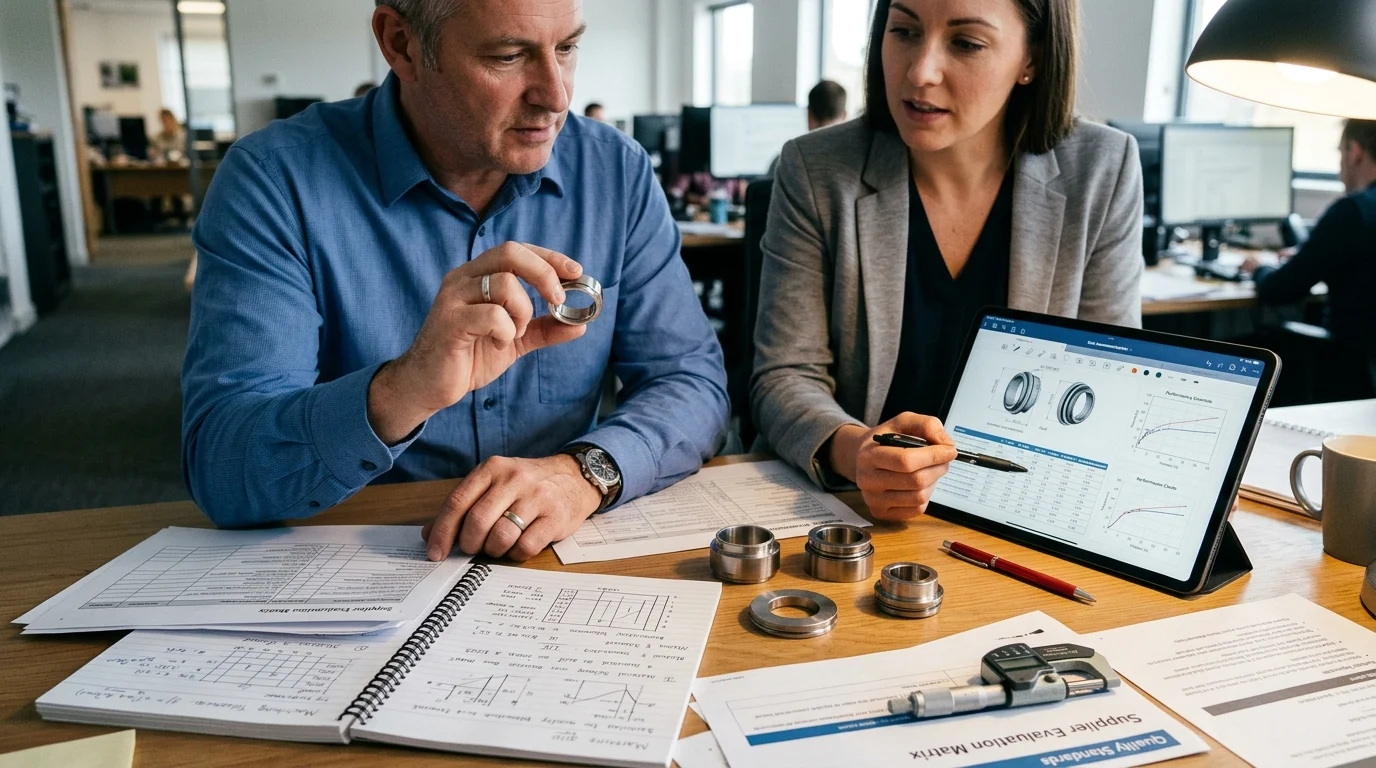
While the theoretical benefits of vertical integration are compelling, OEMs must rigorously audit prospective suppliers to ensure their internal capabilities match their claims. A truly integrated manufacturer must possess not only the heavy machinery but also the mature quality management frameworks necessary to sustain precision at scale.
Checks for capacity, capability, and quality systems
Evaluating an integrated supplier begins with their physical and systemic infrastructure. OEMs should verify that the facility utilizes high-rigidity CNC turning centers with spindle speeds exceeding 10,000 RPM, which are necessary for the fine finishing of hard stainless alloys. Furthermore, the supplier must demonstrate robust metrology capabilities, utilizing coordinate measuring machines (CMM) and optical comparators capable of sub-micron verification to support their 100% inspection claims.
Capacity must also align with OEM production forecasts. A reliable partner should possess the manufacturing elasticity to handle minimum order quantities (MOQs) ranging from small 50-unit prototype batches up to full-scale production runs of 10,000 units or more, all without any degradation in the ±0.002mm tolerance standard. ISO 9001 certification and fully documented material traceability for every stainless steel billet are non-negotiable baselines.
Single-source responsibility and risk reduction
Perhaps the most critical strategic benefit for an OEM is single-source responsibility. In a fragmented supply chain, a seal failure during pressure testing often triggers a damaging blame game: the assembly house blames the machine shop for poor tolerances, while the machine shop blames the assembly house for improper installation. Vertical integration wholly eliminates this friction.
By utilizing a vertically integrated supplier, OEMs benefit from one unified team accountable for the
Key Takeaways
- The most important conclusions and rationale for precision seal components
- Specs, compliance, and risk checks worth validating before you commit
- Practical next steps and caveats readers can apply immediately
Frequently Asked Questions
Why does vertical integration matter for SS316 mechanical seal components?
It keeps billet selection, CNC machining, lapping, inspection, and assembly under one roof, reducing variation and improving seal reliability.
What tolerances can integrated machining achieve for precision seal components?
Critical mating surfaces can be held to about ±0.002 mm, helping maintain alignment, fluid film stability, and low leakage risk.
How does in-house machining improve surface finish on seal faces?
Dedicated grinding and lapping lines can consistently achieve Ra 0.2 µm or better, which supports stable face contact and longer wear life.
Can vertical integration shorten lead times for OEM seal orders?
Yes. A multi-vendor cycle of 6 to 10 weeks can often be reduced to about 1 to 4 weeks with internal machining and testing.
How does integrated production reduce defects in mechanical seal manufacturing?
With 100% in-process inspection and immediate tool-wear correction, defect rates can drop from roughly 3.5% to below 0.5%.
