


What Are the Best Mechanical Seals for Wastewater Treatment Pumps?

Introduction
Choosing a mechanical seal for a wastewater treatment pump is a reliability decision as much as a component purchase. Abrasive solids, chemical exposure, pressure changes, and intermittent dry running can quickly destroy seals designed for cleaner services, leading to leakage, bearing damage, and unplanned shutdowns. This article explains which seal designs and material combinations perform best in wastewater duty, including when to use single, double, cartridge, or split seals and how factors like solids content, temperature, and maintenance access affect the choice. By the end, readers will have a practical framework for matching seal type to operating conditions and reducing lifecycle cost.
Why Wastewater Pump Seals Matter
Wastewater treatment facilities operate in some of the most demanding fluid-handling environments across the industrial spectrum. The mechanical seals installed in these pumps serve as the primary barrier between highly contaminated process fluids and the external environment. Selecting the correct mechanical seal is not merely a maintenance preference; it is a critical engineering decision that dictates the operational efficiency, safety, and environmental compliance of the entire facility.
Impact on uptime and leakage risk
The direct correlation between mechanical seal integrity and pump uptime cannot be overstated. A compromised seal is the leading cause of centrifugal pump failure, often accounting for nearly 70% of unexpected maintenance events in wastewater facilities. When a seal fails, process fluid leaks into the bearing housing, leading to rapid bearing degradation, shaft deflection, and ultimately, catastrophic pump failure.
Beyond mechanical damage, leakage introduces severe environmental and safety risks. Raw sewage or chemically treated industrial effluent escaping into the plant environment can trigger regulatory fines and require hazardous cleanup protocols. By upgrading to engineered sealing solutions, plants can often extend their Mean Time Between Failures (MTBF) from a baseline of 6 to 12 months to well over 36 months.
Operating conditions that shorten seal life
Mechanical seals in wastewater applications face a barrage of hostile operating conditions that can severely truncate their lifespan if not properly managed. The most prominent threat is the presence of abrasive particulates. Wastewater slurries frequently contain 5% to 15% suspended solids by volume. When these hard particles migrate between the seal faces, they cause scoring, grooving, and premature wear.
Additionally, wastewater systems frequently experience off-design operating conditions such as dry running or cavitation. Dry running occurs when the pump loses its prime, removing the fluid film that lubricates and cools the seal faces. Chemical volatility also plays a role; industrial wastewater pH can swing violently between highly acidic (pH 3) and highly alkaline (pH 11), accelerating the corrosion of standard metallurgical components.
Best Mechanical Seals for Wastewater Pumps
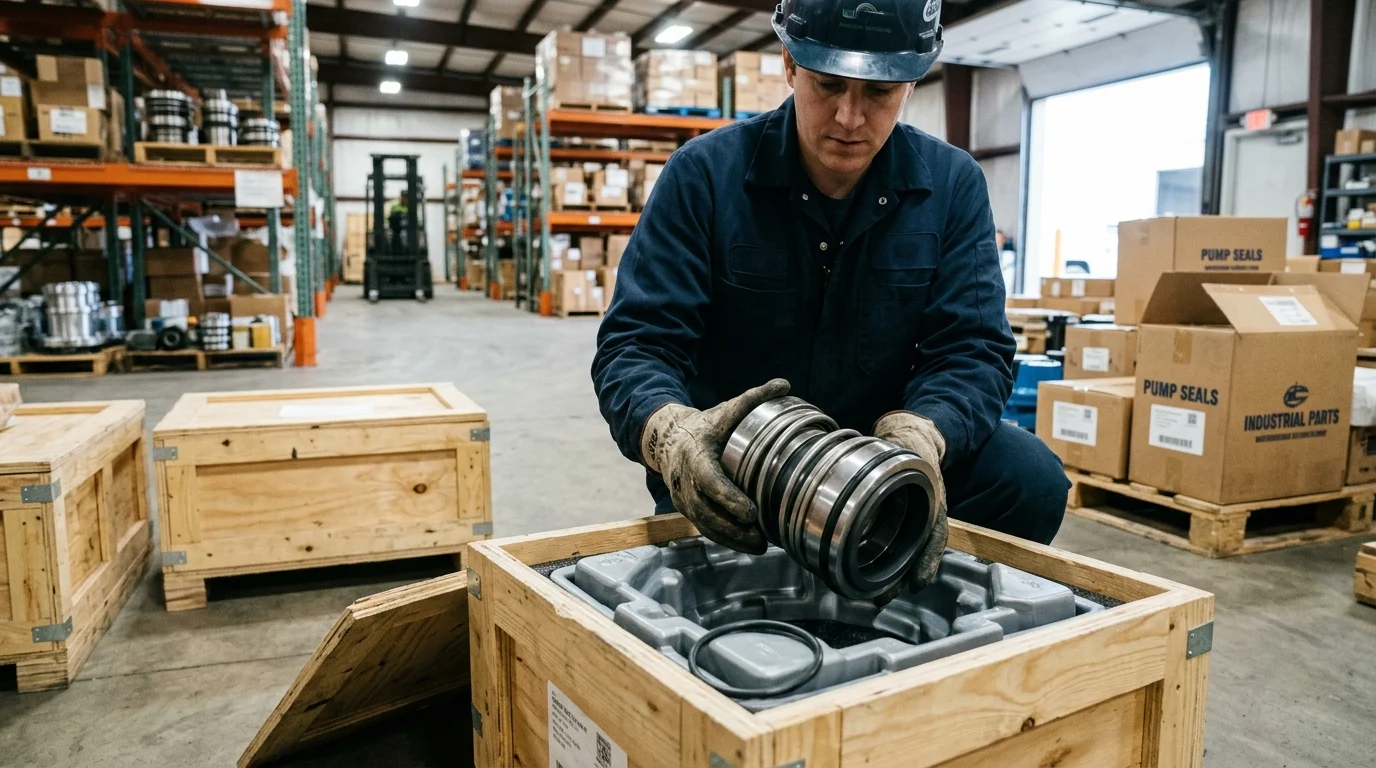
Navigating the diverse landscape of sealing technology requires matching the specific mechanical design to the fluid profile of the application. The best mechanical seals for wastewater pumps are engineered to tolerate solids, resist chemical attack, and simplify maintenance procedures.
Seal types and where they fit
Seal types are generally categorized by their structural design and how they maintain face pressure. Pusher seals utilize a dynamic O-ring that moves axially along the shaft to compensate for face wear. While cost-effective, these are prone to "hang-up" in wastewater applications when solids build up on the shaft, preventing the O-ring from advancing and causing the seal faces to open.
Conversely, non-pusher bellows seals are highly favored in wastewater environments. Because they use a flexible metallic or elastomeric bellows to maintain face pressure, there is no dynamic O-ring to clog with sludge. Bellows seals excel in handling sticky, high-viscosity fluids and heavy particulates.
Single vs double vs cartridge vs split seals
The choice between single, double, cartridge, and split configurations dictates both the installation complexity and the seal's ability to handle severe duty cycles. Cartridge seals combine the seal faces, gland, and sleeve into a single pre-assembled unit. This eliminates the need for precise manual measurements during installation, drastically reducing human error.
| Seal Configuration | Primary Application | Relative Cost | Maintenance Complexity |
|---|---|---|---|
| Single Component | Clean effluent, low solids | Low | High (requires pump teardown) |
| Double Cartridge | High solids, toxic fluids | High | Low (pre-assembled unit) |
| Split Seal | Large equipment, tight spaces | Medium | Lowest (no equipment teardown) |
Face materials, elastomers, and metallurgy
For seal faces, Silicon Carbide (SiC) and Tungsten Carbide (TC) are the industry standards for wastewater. SiC offers exceptional hardness (up to 2500 HV) and superior thermal conductivity. Elastomers (O-rings and gaskets) must be selected based on the chemical composition of the effluent. Fluoroelastomers (FKM/Viton) are standard for general wastewater, but Ethylene Propylene Diene Monomer (EPDM) is preferred when handling caustic chemical dosing.
How to Evaluate Seals Beyond Price
Key comparison criteria
The most effective framework for comparing mechanical seals is Lifecycle Cost (LCC) analysis. The initial capital expenditure (CAPEX) typically represents less than 15% of a seal's total LCC. The remaining 85% is comprised of operational expenditures (OPEX), including the cost of barrier fluids, flush water consumption, energy losses due to face friction, and maintenance labor.
Compliance, leakage limits, and safety requirements
Regulatory compliance is an increasingly stringent factor in wastewater management. Double mechanical seals are typically mandatory in highly regulated environments to guarantee zero-leakage of the process fluid to the atmosphere. Partnering with experienced manufacturers ensures that the selected sealing technology meets both local municipal codes and international safety standards.
Selecting and Implementing the Right Seal
Step-by-step selection process
The selection process must begin with a comprehensive fluid and operational analysis. Engineers must define the fluid's specific gravity, viscosity, particulate size, and concentration. For complex or non-standard pumping applications, reaching out for custom engineering support is highly recommended.
Installation and operating practices to prevent early failure
Installation precision directly dictates seal life. Industry standards require shaft runout to be kept strictly below 0.002 inches (0.05 mm) Total Indicator Reading (TIR). Utilizing an API Plan 11 can help flush away solids from the seal chamber in moderately dirty applications. For heavy sludge, an API Plan 53A ensures that clean, cool fluid always lubricates the seal faces.
Which Seals Deliver the Best Long-Term Value
| Facility Type | Primary Operational Focus | Typical Fluid Profile | Recommended Sealing Strategy |
|---|---|---|---|
| Municipal Plant | Long MTBF, reduced labor hours | Raw sewage, biological sludge | Single/Double Cartridge, Split seals |
| Industrial Plant | Chemical resistance, zero emissions | Effluent with solvents/acids | Double seals with API Plan 53A/54 |
Further reading:
Key Takeaways
- The most important conclusions and rationale for Wastewater Pump Seals
- Specs, compliance, and risk checks worth validating before you commit
- Practical next steps and caveats readers can apply immediately
Frequently Asked Questions
Non-pusher bellows seals are often the best fit because they resist solids buildup and handle sticky, abrasive wastewater better than pusher designs.
Use a double seal for abrasive sludge, hazardous effluent, frequent dry running risk, or when leakage control and longer uptime are critical.
Yes. Cartridge seals simplify installation, reduce alignment errors, and speed maintenance, which helps cut downtime in treatment plants.
Silicon carbide faces are commonly chosen for abrasion resistance, with corrosion-resistant elastomers and metal parts selected to match pH and chemicals.
Yes. GW Seal offers wastewater pump seal options and product configurations to help match solids content, chemistry, and pump duty conditions.
